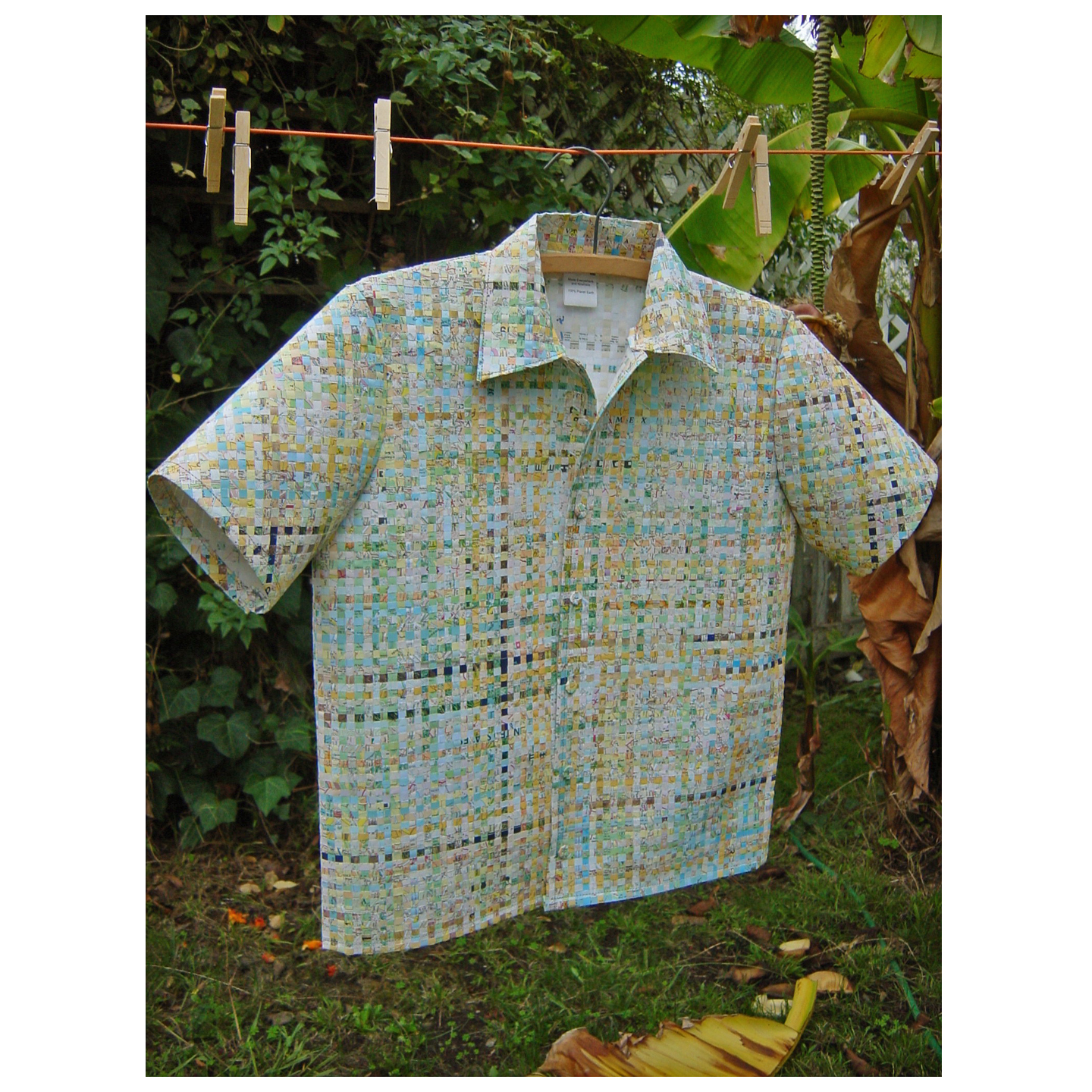
 Woven strips from paper maps from around the world.
 Close-up of map shirt.
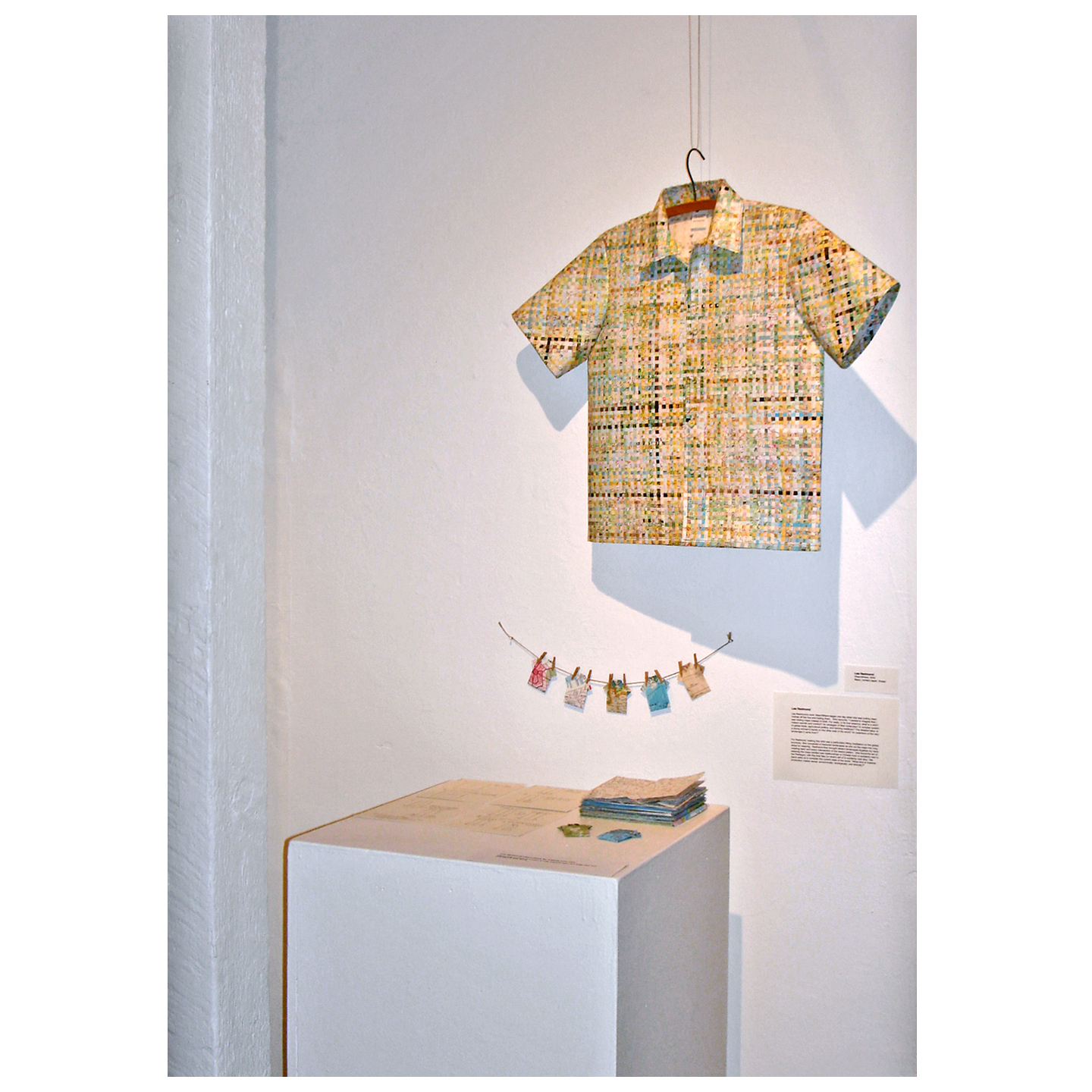 On exhibit. Visitors could make their own little origami map shirt.
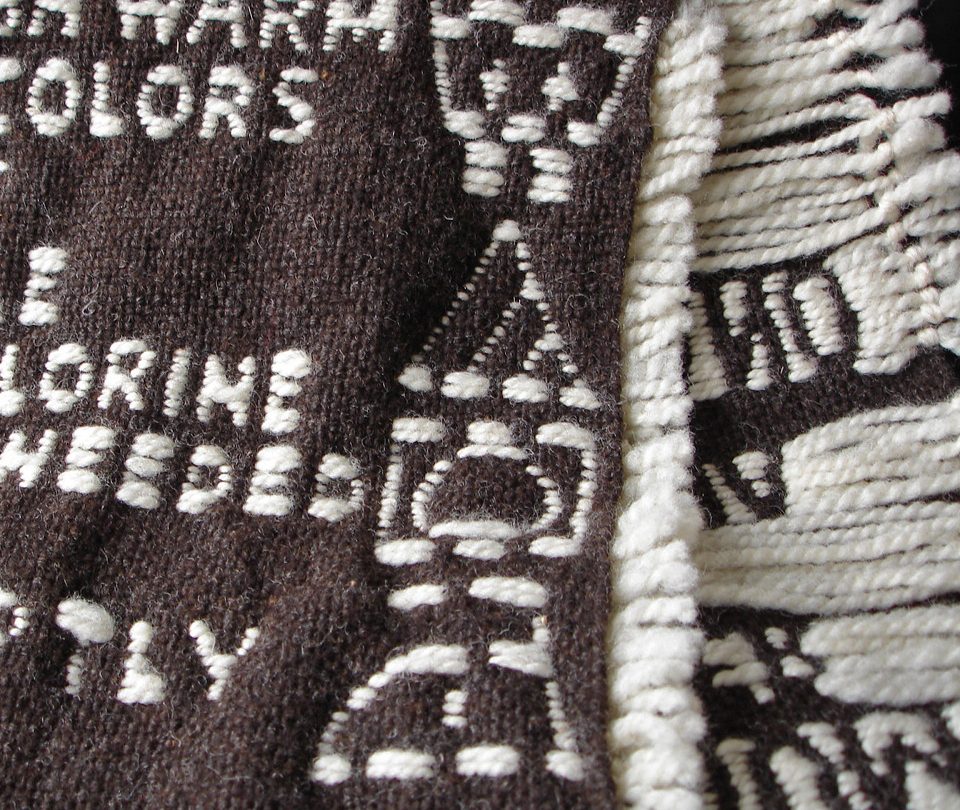
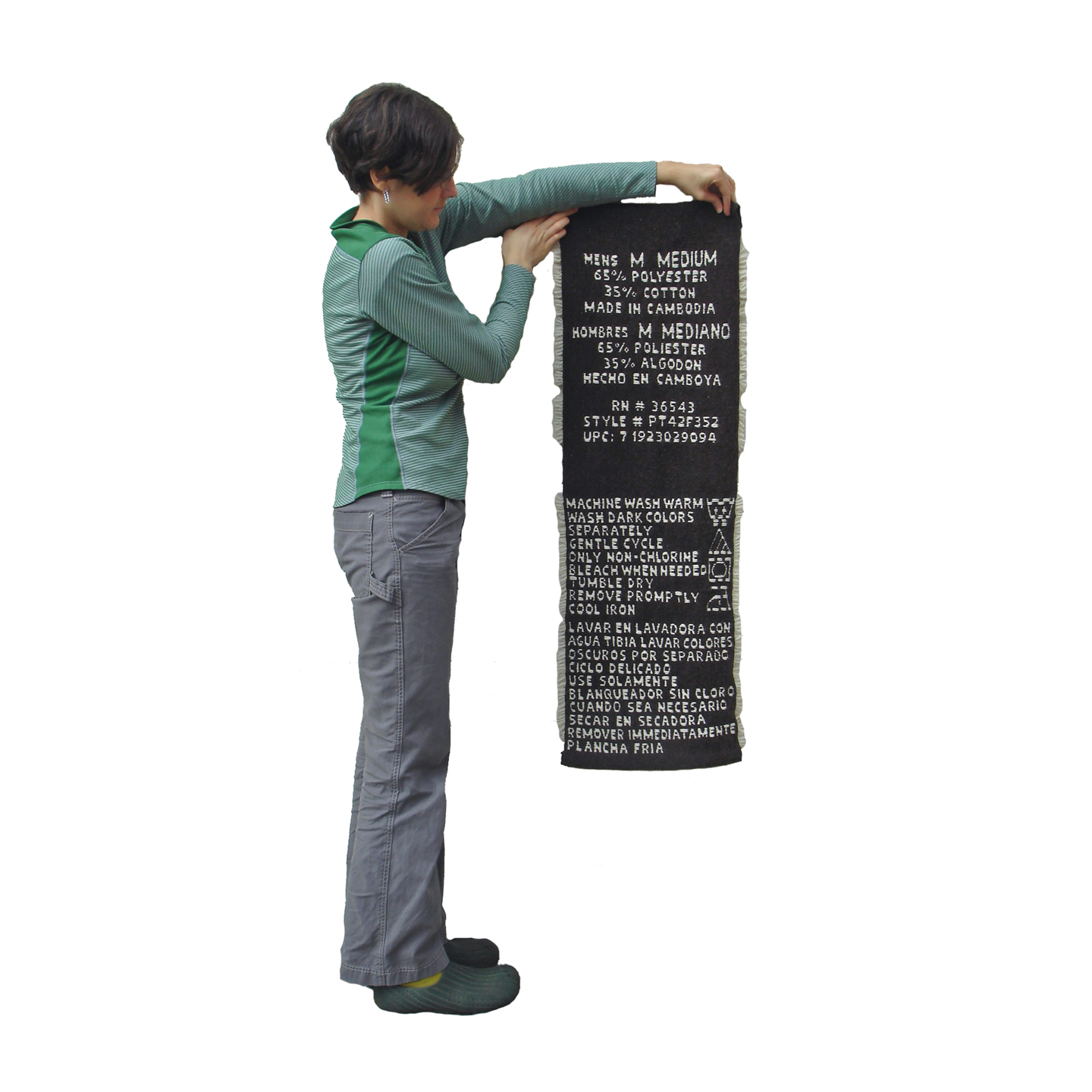 Giant hand-woven clothes tag, wool from Jacob Meridian farm near Vacaville.
 The original, model clothes tag.
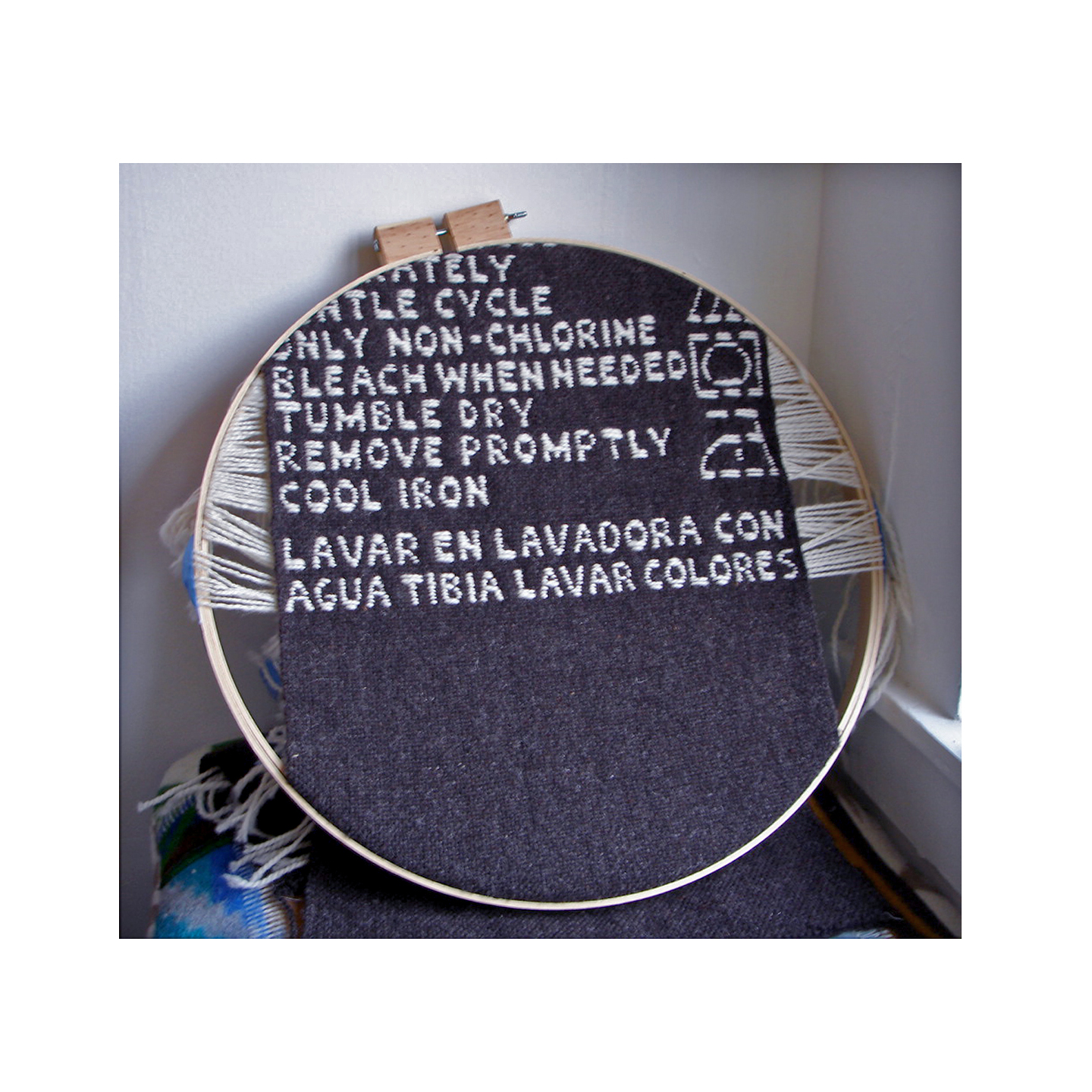 Weaving in process.
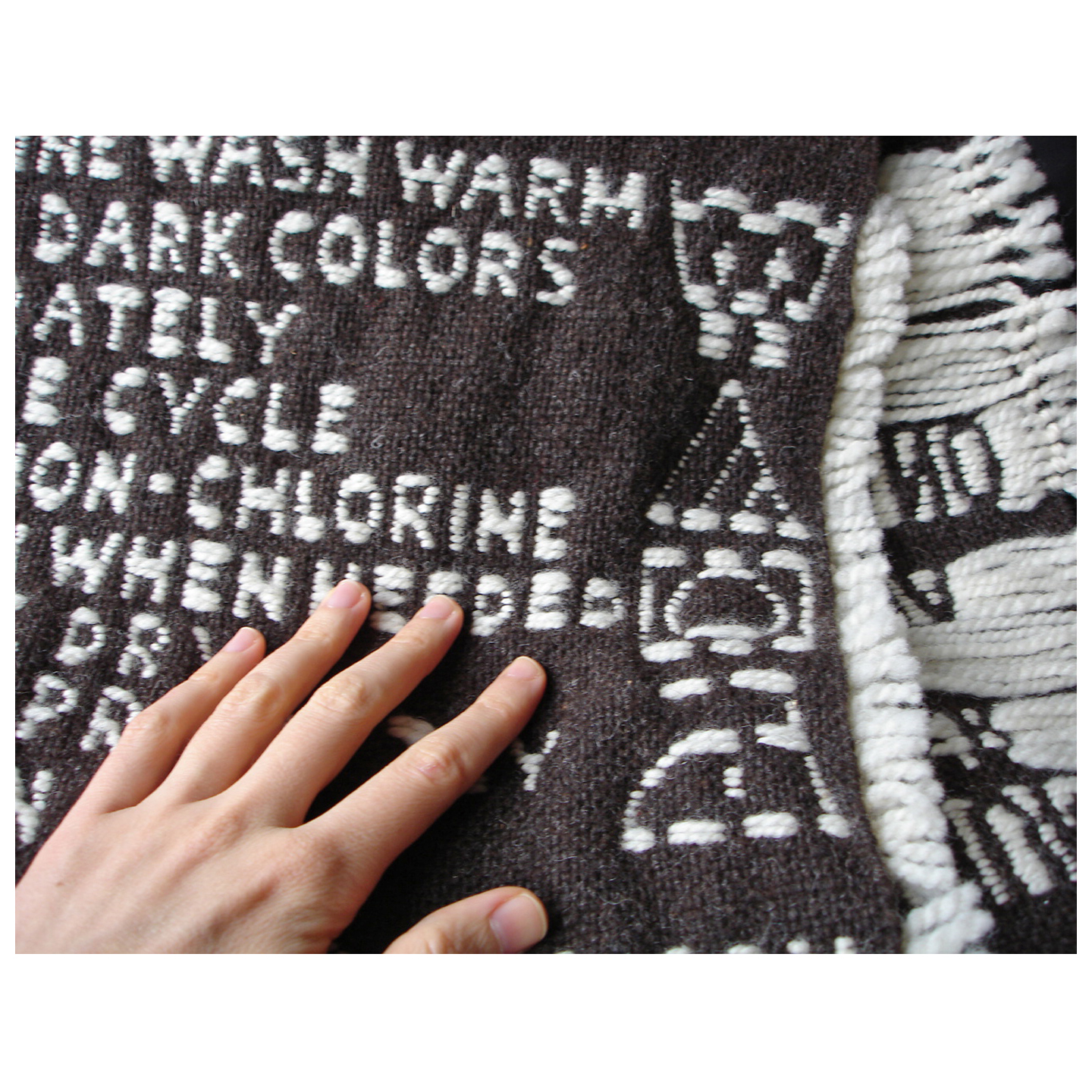 Close-up.
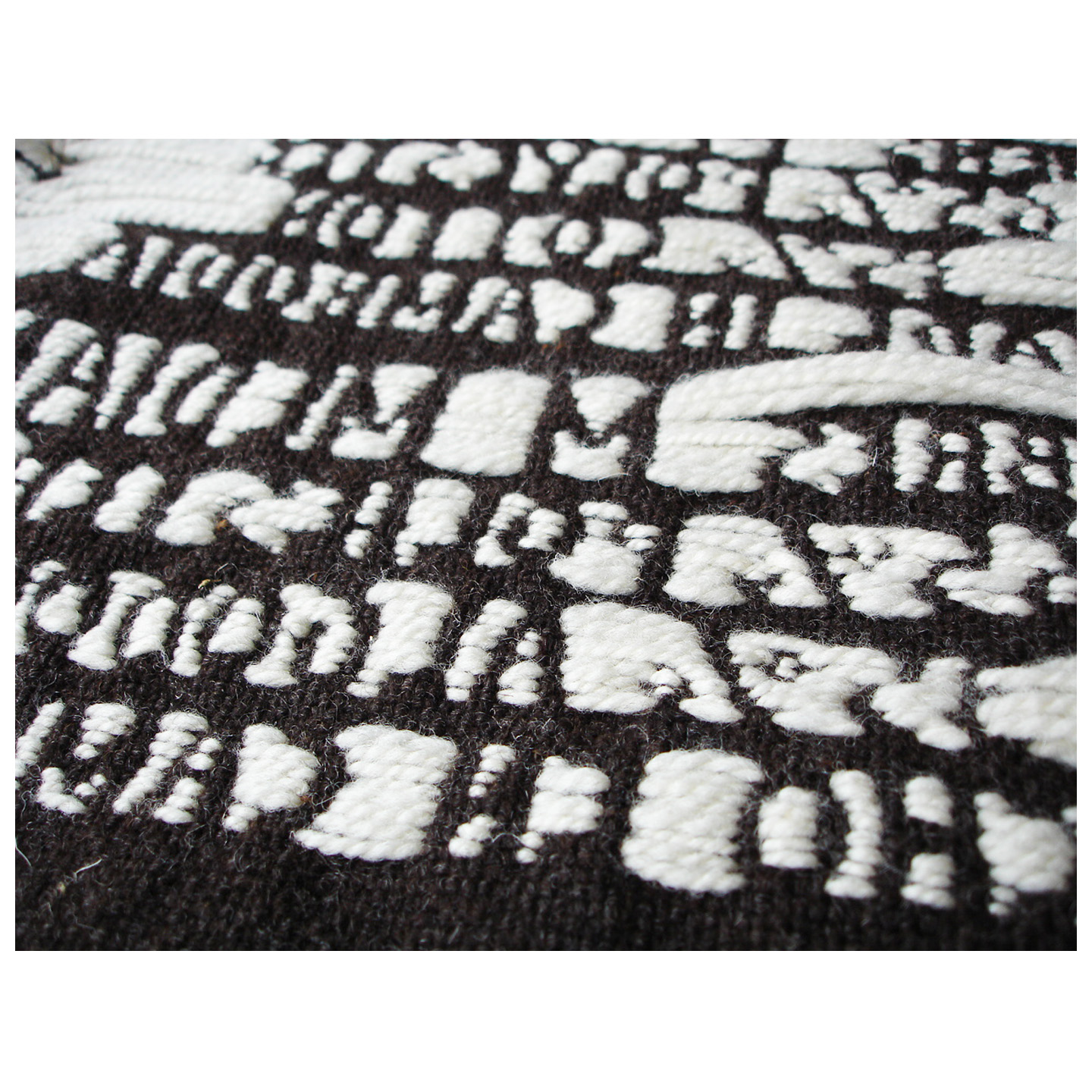 Close-up of reverse side.
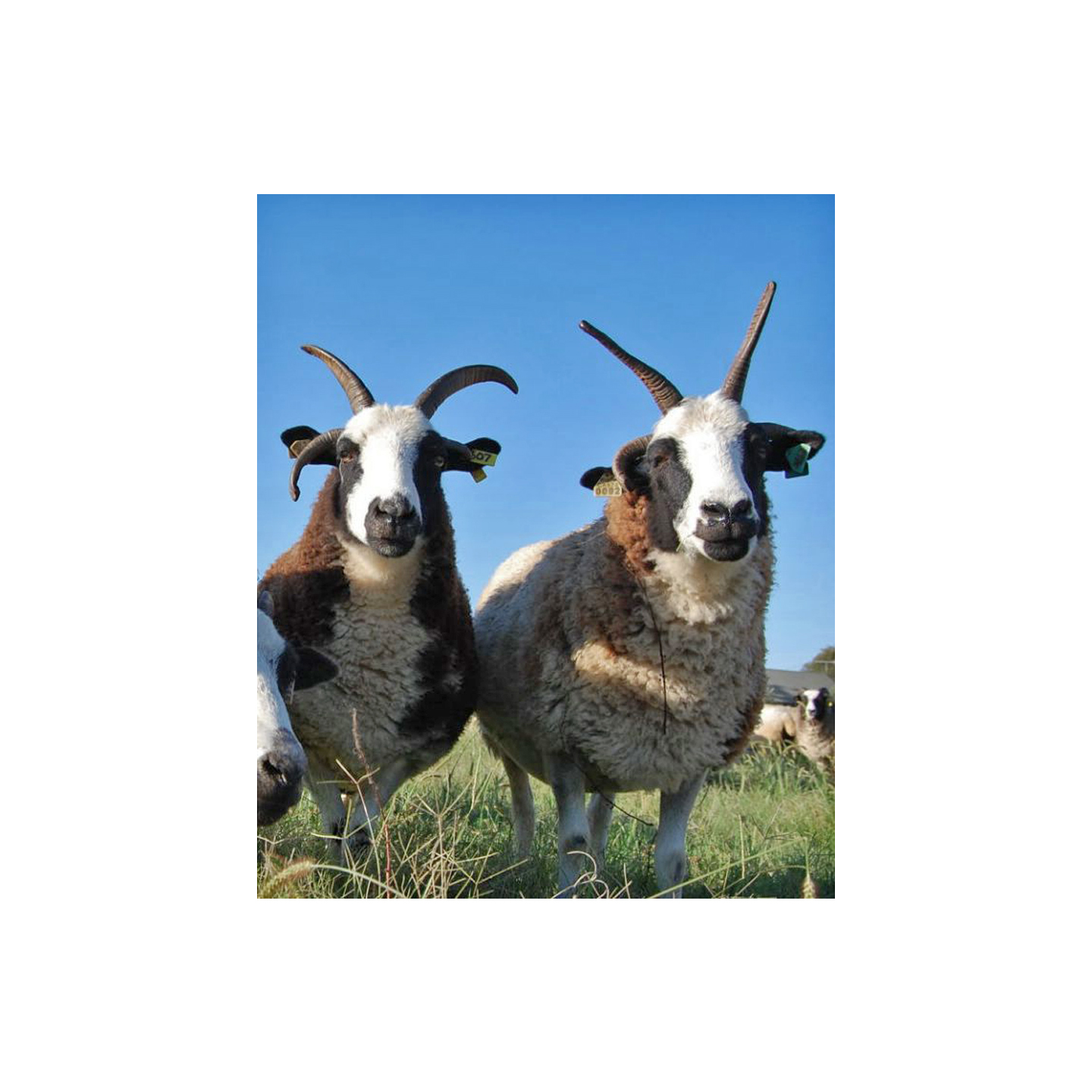 Jacob sheep. Jacob are a breed with brown and white spots. The giant clothes tag is woven from the darkest spots and the lightest spots of the sheep.
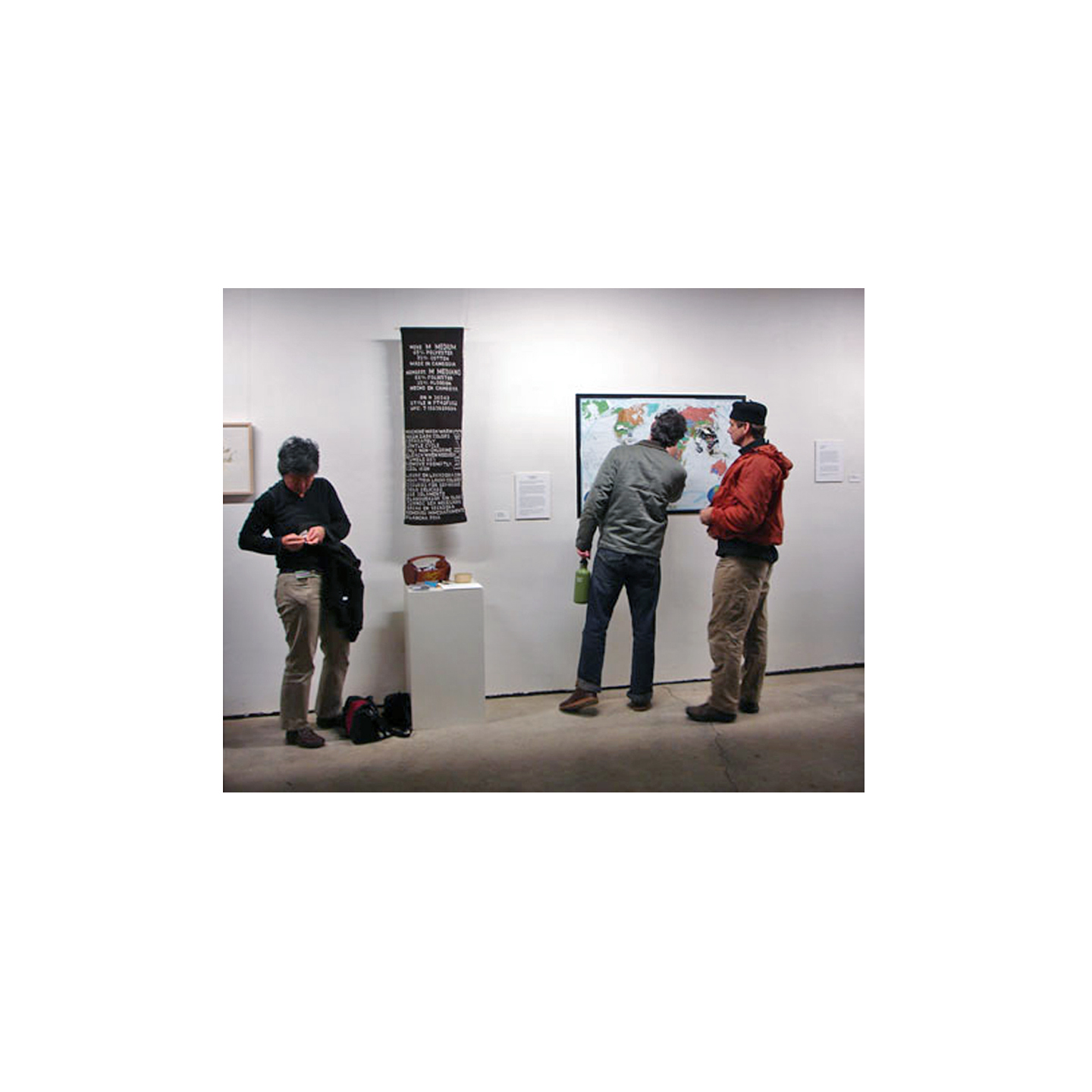 On exhibit at The Cheese Factory in Petaluma.
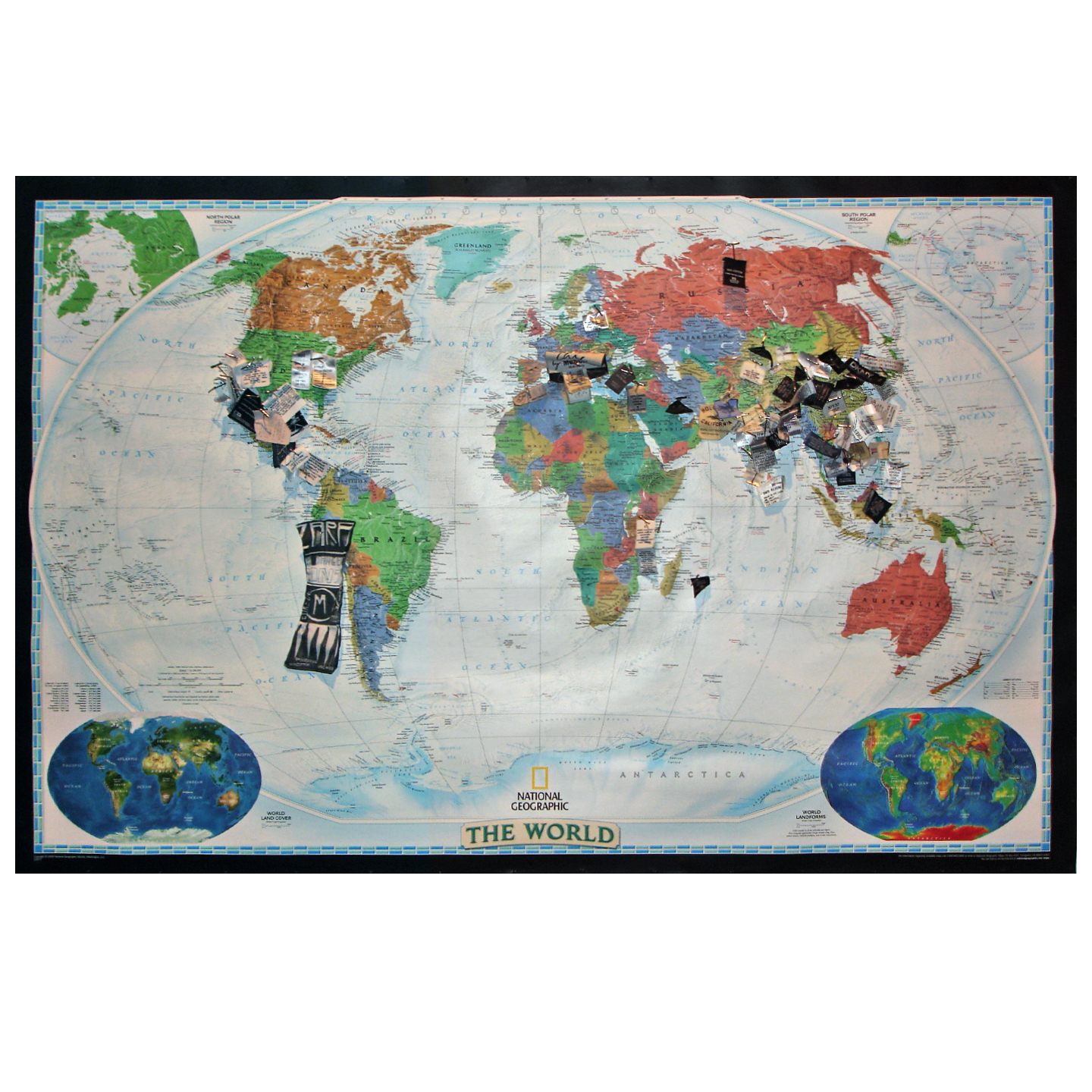 For the tag exchange, people gave (and sent) me clothes tags they cut out of their garments. I pinned them on a world map at the place of origin.
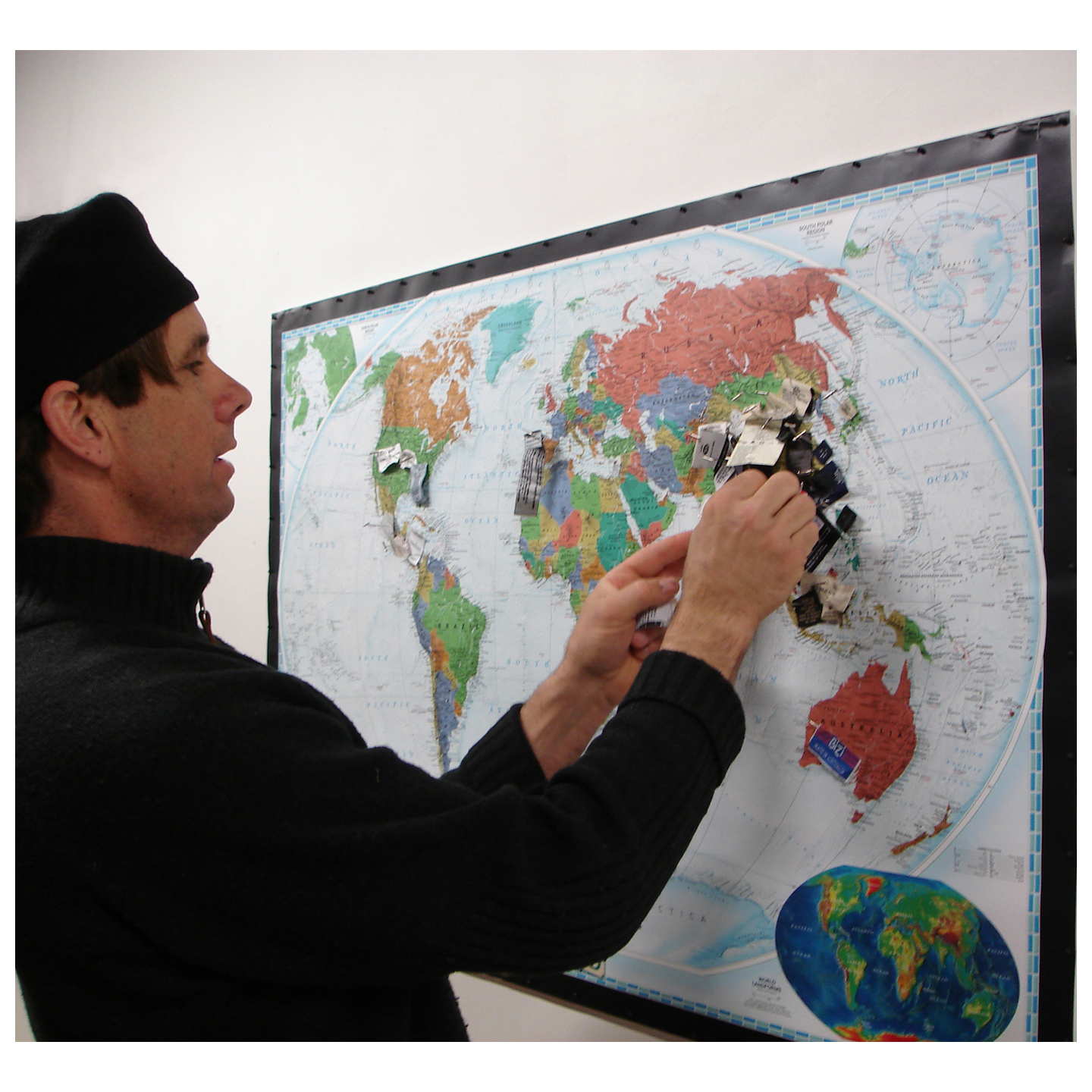 Tag being pinned to world map at The Cheese Factory.
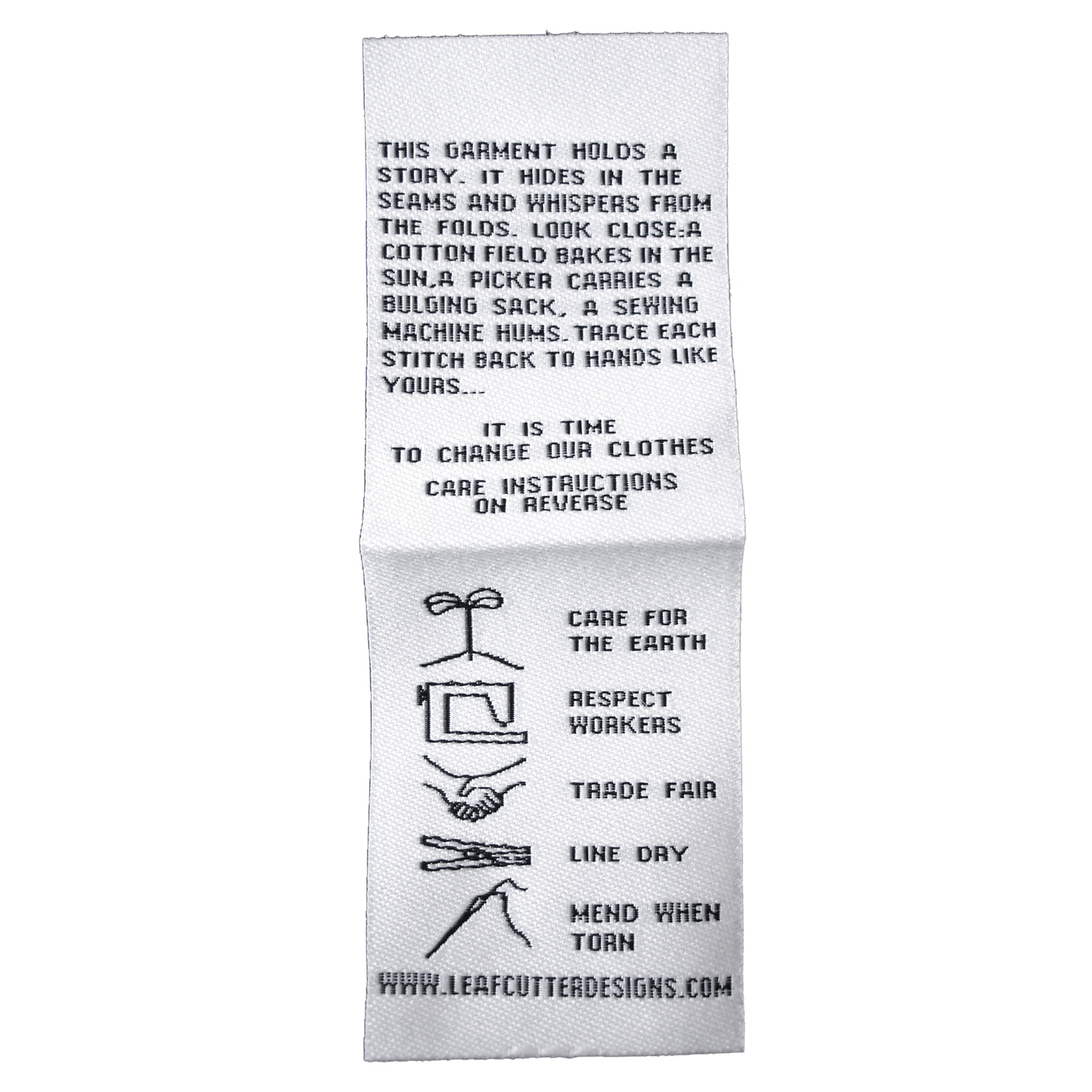 Custom tags, designed by Lea, given in exchange, to be sewn in place of the original tags.
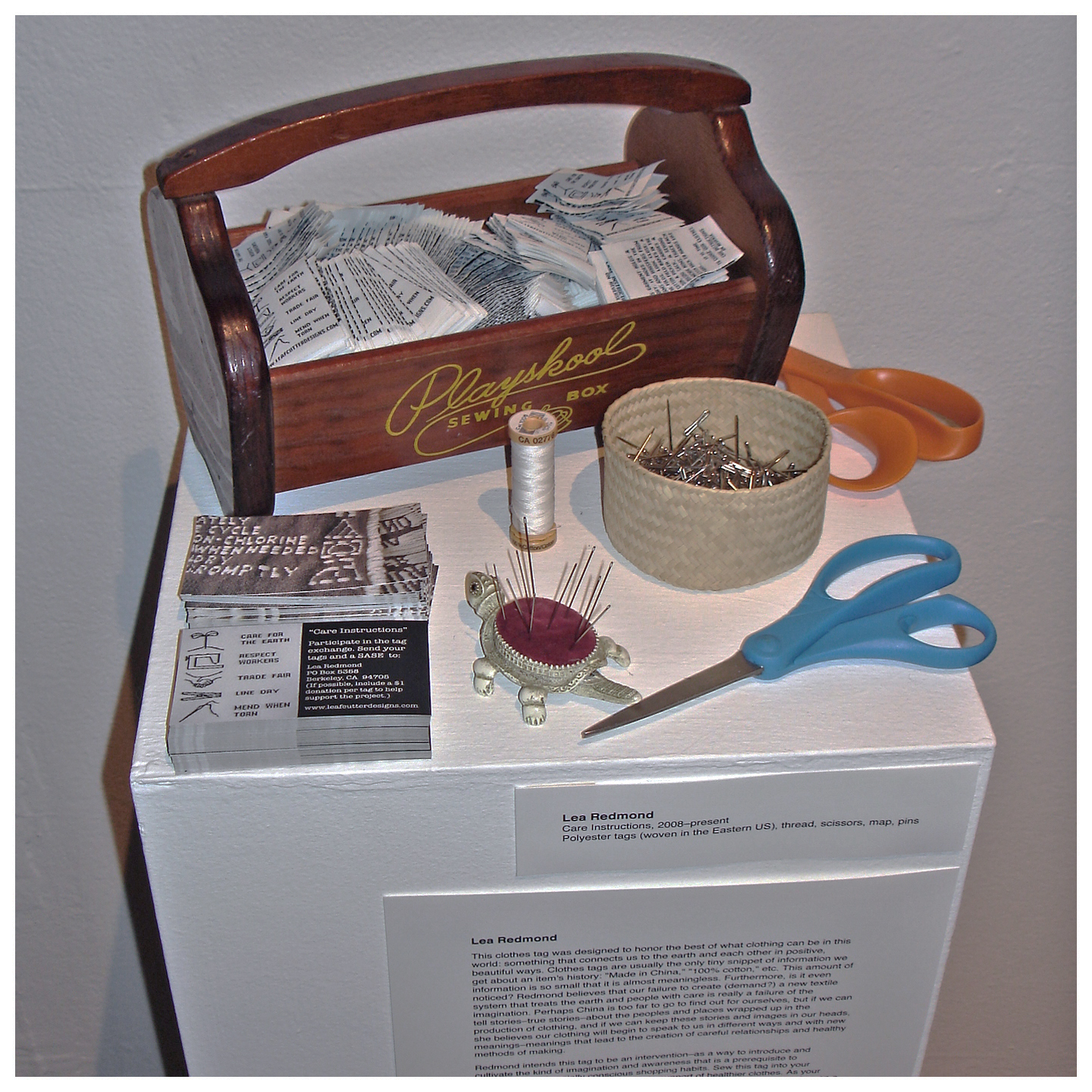 Tag exchange tools, on exhibit.
 This participant chose to attach their tag in a more public place on their garment!
 Lea spinning wool yarn at a mall in Santa Rose, California.
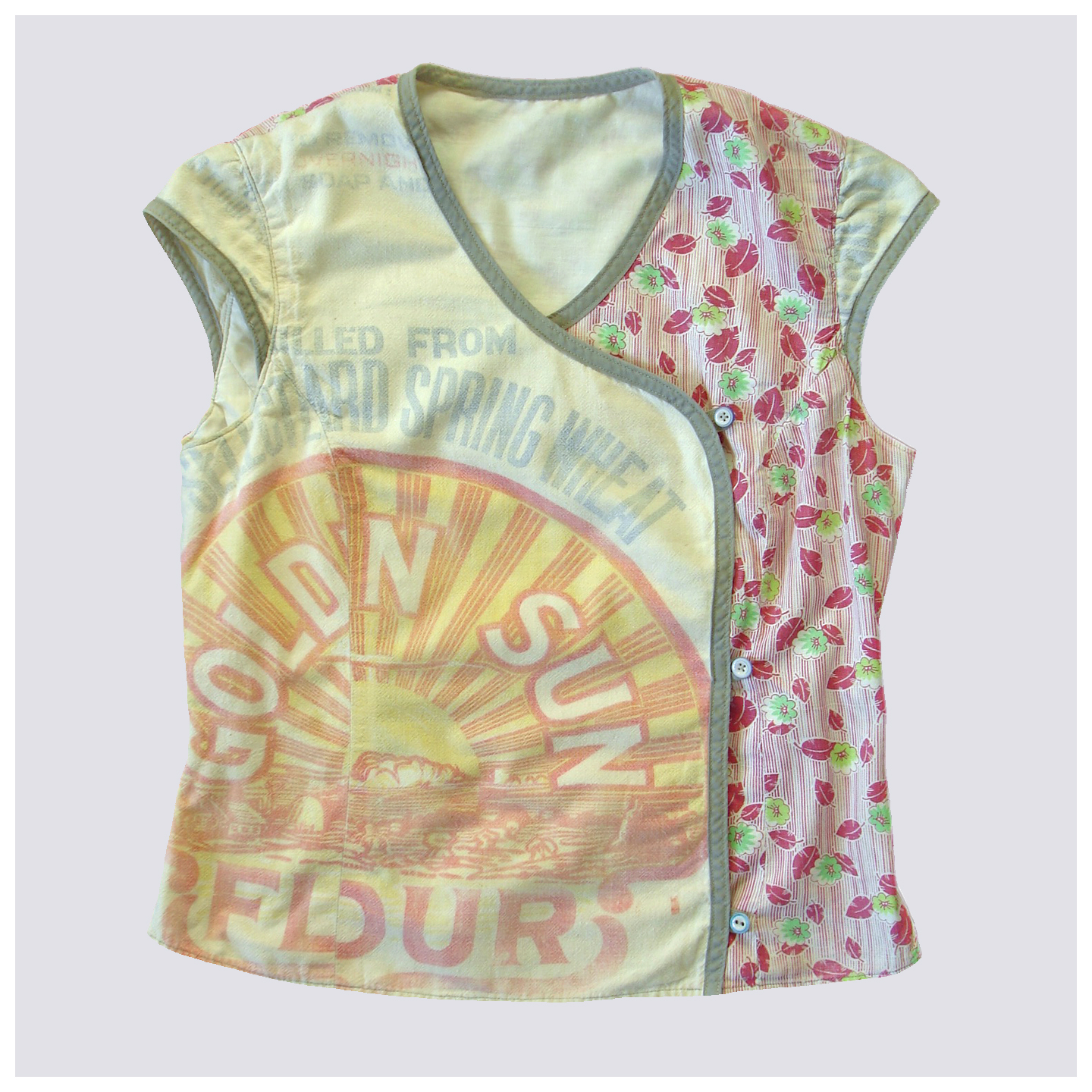 Lea's flour sack shirt. People saved and made clothes, dishtowels, pillows, even underwear out of old cotton flour and seed sacks during the Depression.
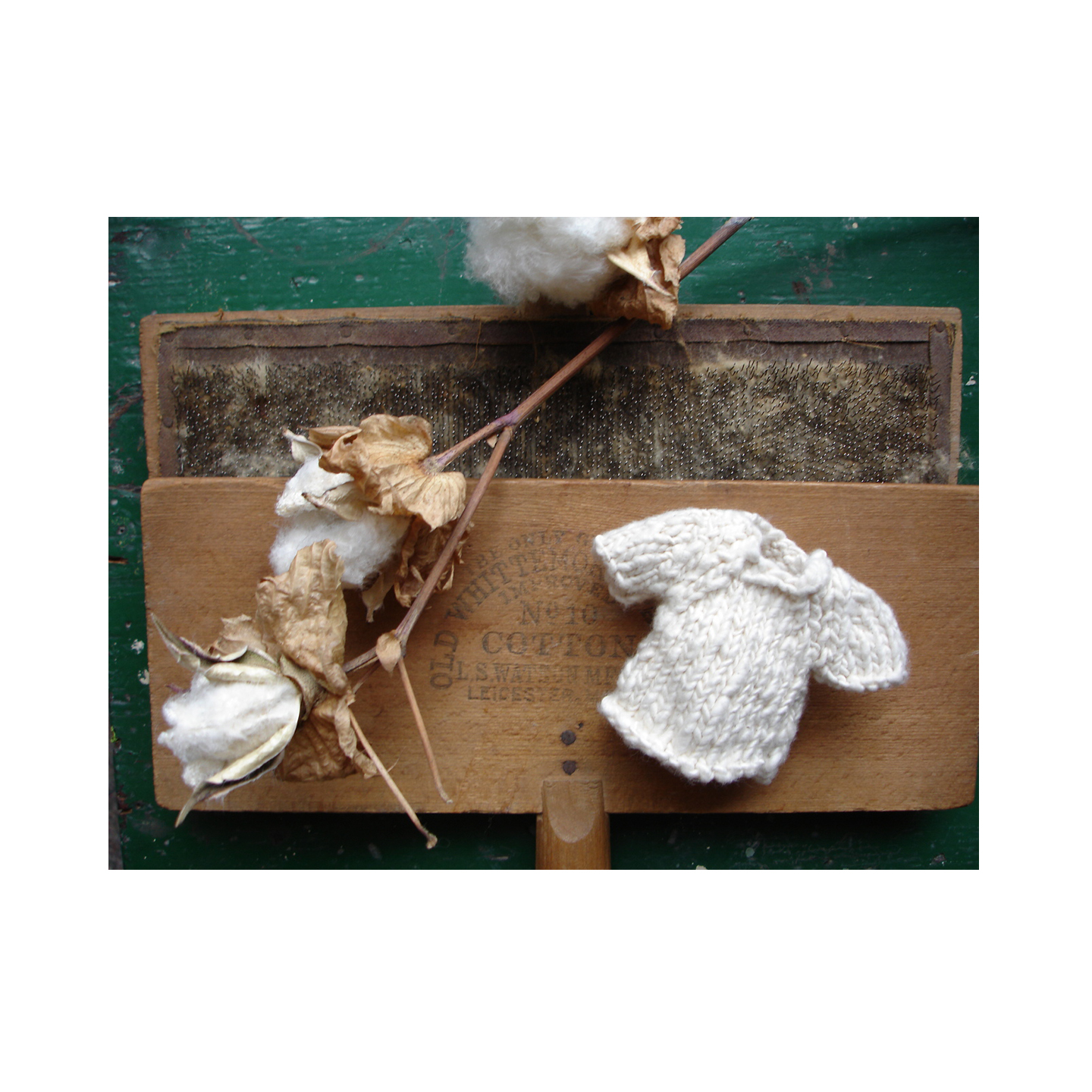 A shirt "growing" out of a cotton plant.
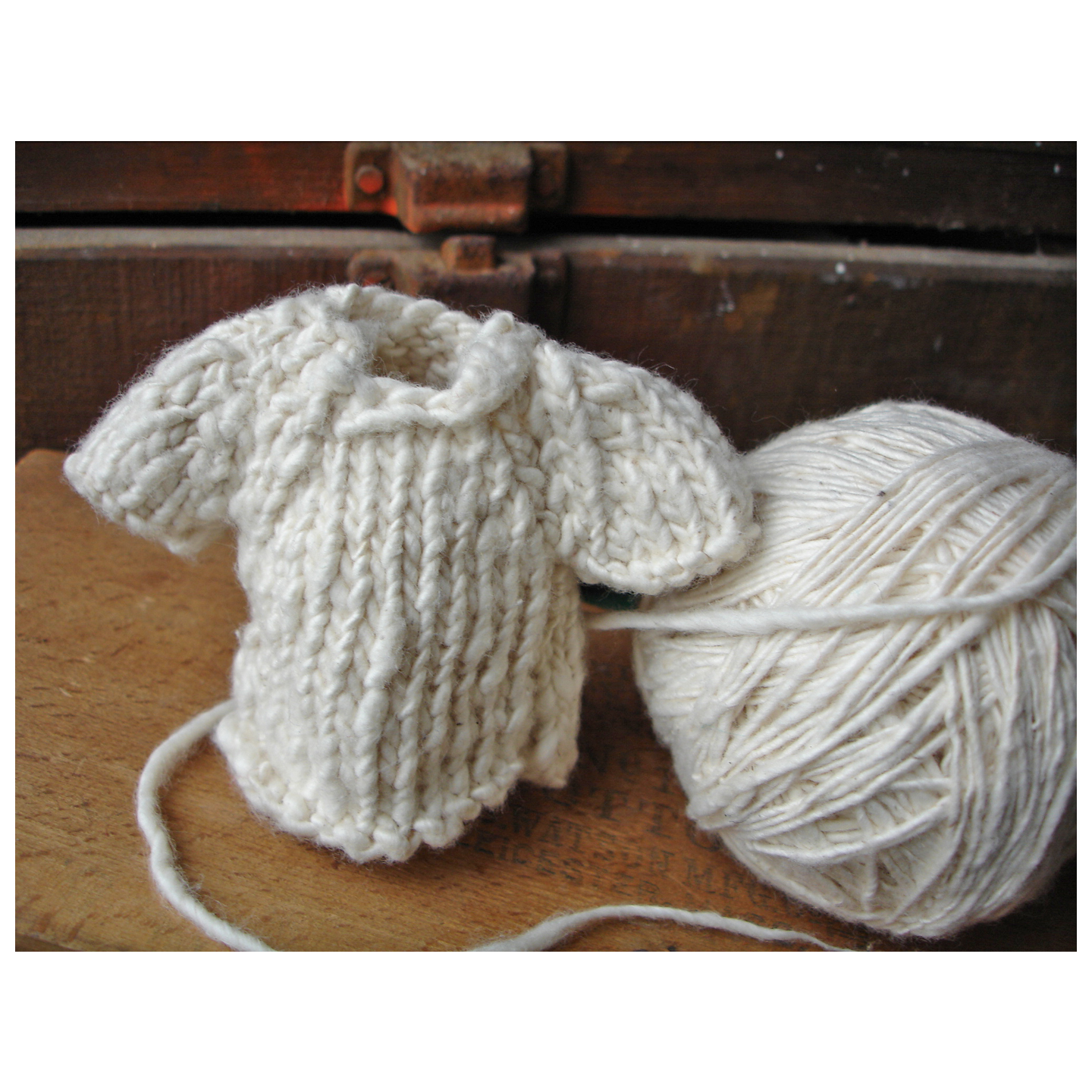 Hand-spun shirt, the size of a cotton blossom.
Changing Clothes
What truly is a shirt?
Is it instant warmth and comfort? Or is it really an amalgam of fiber molecules? Or, is it actually a complex system of global trade, agricultural politics, farming traditions, and the detailed labor of a young woman’s hands on the other side of the planet? Can the truth of a shirt really fit into a space as small as your closet?
The “Changing Clothes” project investigated the politics and ecology of clothes through a series of social sculptures that explore the everyday world of producing, wearing, and discarding clothing.
In the gallery to the left, you will see:
• a shirt made out of maps from around the world
• a giant hand-woven reproduction of a clothes tag
• a clothes tag exchange
• Lea spinning yarn in the mall
• a shirt sewn out of vintage flour sacks
• a hand-spun shirt the size of a cotton blossom
You may also enjoy:
Lea’s Handmade Shoes
Private: Knit The Sky